Replace One Tooth.
Keep the Rest.
A titanium root fused to your jawbone, topped with a custom crown. The closest thing to your original tooth — in look, feel, and function.
- No damage to adjacent healthy teeth
- 98% long-term success rate
- Permanent — lasts decades with proper care
What It Is
A Complete Tooth Replacement From Root to Crown
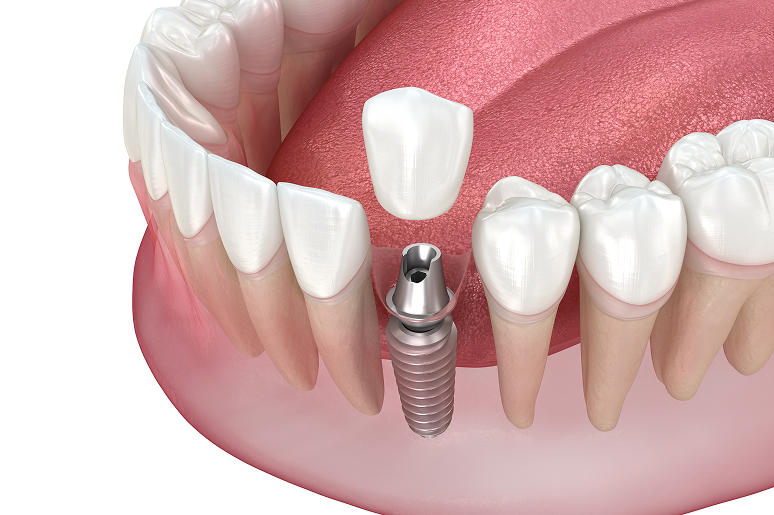
A single dental implant is a titanium post surgically placed into the jawbone, acting as an artificial tooth root. Once it fuses with the bone — a process called osseointegration — a custom abutment and crown are attached on top, creating a restoration that looks, feels, and functions like a natural tooth.
Unlike traditional bridges, implants don't rely on neighboring teeth for support. They stand completely on their own, and because the titanium root stimulates the jawbone, they actually help prevent the bone loss that occurs after tooth loss.
- Preserves jawbone and facial structure
- Natural appearance — matched to your surrounding teeth
- Brush and floss like a real tooth — no special maintenance
- Protects neighboring teeth from shifting
Is This Right for You?
Who Is a Good Candidate for Single Implants?
Most adults with a missing tooth are candidates. A 3D scan at your consultation will confirm whether your jawbone can support an implant — or whether a bone graft is needed first.
- Are missing one or more teeth (in separate locations)
- Have healthy gums with no active infection
- Have adequate bone density in your jaw
- Are in generally good overall health
- Are a non-smoker, or willing to quit during healing
- Want a long-term solution, not a temporary fix
- Some bone loss — a bone graft can build the foundation
- Had a tooth missing for years — late placement is common
- Diabetes — well-controlled diabetes is not a disqualifier
- Thin gums — soft tissue augmentation is often possible
- Multiple single missing teeth — each gets its own implant
The Process
How a Single Implant Works
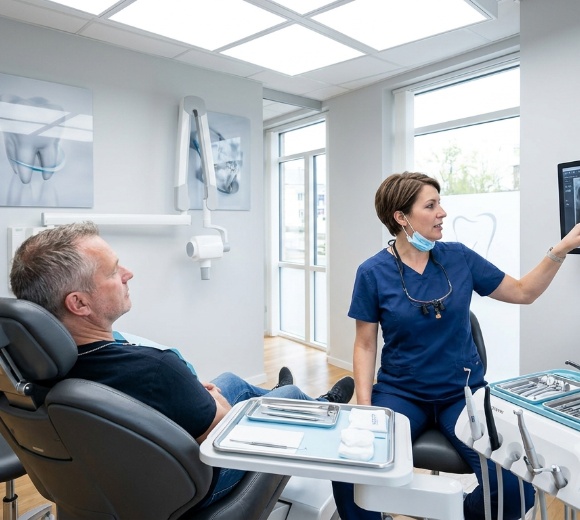
A cone beam CT scan maps your bone, nerves, and sinuses in 3D. Dr. Pasicznyk reviews your anatomy and develops a precise placement plan.
A small titanium post is surgically placed into the jawbone under local anesthesia. Most patients describe minimal discomfort — less than a tooth extraction.
Over 3–6 months, the implant fuses directly with your jawbone. This biological bond is what makes implants permanent and prevents bone loss.
A custom porcelain crown — matched to the shape, size, and color of your natural teeth — is attached to the implant. Your new tooth is complete.
Your custom crown is matched to your adjacent teeth. Patients often forget which tooth is the implant — that's the goal.
The titanium root stimulates bone like a natural tooth. Without it, the jawbone beneath a missing tooth shrinks — changing your face shape over time.
Brush and floss normally. No soaking, no adhesives, no extra steps. Treat it like every other tooth and it can last a lifetime.
Common Questions
Single Implant FAQs
Most patients are surprised by how comfortable the procedure is. Placement is done under local anesthesia, and Dr. Pasicznyk uses precise guided techniques that minimize trauma. Post-operative soreness is typically managed with over-the-counter pain relievers for 1–3 days.
From placement to final crown, the typical timeline is 4–8 months. Most of that is healing time — not active treatment. The implant surgery itself takes about an hour, and crown placement is a short follow-up appointment.
Cost depends on whether bone grafting or other preparatory procedures are needed. We provide detailed, transparent pricing at your consultation — and offer financing options so cost doesn't stand in the way of a permanent solution. Call or book a consult to get your personalized estimate.
With proper care and regular checkups, the implant itself can last a lifetime. The crown on top may need replacement after 15–25 years due to normal wear. That's still far longer than a traditional bridge, which typically lasts 10–15 years before needing replacement.
Yes — though bone loss may have occurred, which can require a bone graft first. Dr. Pasicznyk performs advanced bone grafting in-house, so we can often restore the foundation needed for an implant even in patients who have been missing a tooth for many years.
Coverage varies by plan. Some insurance plans cover the crown or preparatory procedures. We'll review your coverage at your consultation and help you maximize your benefits. Financing through third-party providers is also available for patients without coverage.
Get Started Today
Ready to Replace Your Missing Tooth?
Schedule a consultation and get a 3D scan, a complete treatment plan, and transparent pricing — all in one visit.